
La Mirada City Directory Shelf
| Collection | Years | Where Held | Access |
|---|---|---|---|
| Polk directories for La Mirada or Mirada | Exact local run not found | La Mirada Library catalog and reference desk | Ask staff to verify print, microfilm, or regional coverage |
| Haines Criss-Cross volumes | Exact local run not found | La Mirada Library and the LA County Library system | Verify the reverse section and access rules |
| Pacific Bell or General Telephone books | Exact La Mirada run not found | Library catalog and regional holdings | Search La Mirada, Mirada, Norwalk, Whittier, and Buena Park |
| Regional southeast Los Angeles County volumes | Exact runs not found | Library reference services and FamilySearch catalog or microfilm when cataloged | Confirm title, coverage, and format before relying on it |
| Federal population census | 1790-1950 released; 1960 due 2032 | NARA, partner databases, and library databases | 1950 is the newest public census in 2026 |
The coverage table keeps a verified collection separate from a volume that merely seems likely. Inspected official sources did not publish exact La Mirada Polk, Haines, criss-cross, or telephone year runs. They also did not document a dedicated local-history room, an obituary card index, or a digitized official La Mirada sample entry. Those are research gaps, not empty cells to fill with guessed dates.
La Mirada Library, at 13800 La Mirada Blvd., is the first verification stop. Its official page confirms a catalog, computers, and systemwide research databases; card or in-library rules may apply. Staff can say whether a title is held at the branch, elsewhere in the county system, or only as a catalog lead.
La Mirada Began Before Directories
Local history changes how a city directory search begins. La Mirada grew around Andrew McNally’s ranch and olive industry, was known as Mirada before the La Mirada name, and incorporated in 1960. A volume created before incorporation may therefore use a place heading that does not match a modern city search.
The surrounding geography matters too. Norwalk, Whittier, Buena Park, and southeast Los Angeles County may be better catalog terms than La Mirada alone. Telephone and criss-cross books can follow a regional exchange or postal area. Search Mirada, then record the exact title, place heading, and address range before treating an entry as local evidence.
Ask the La Mirada Library
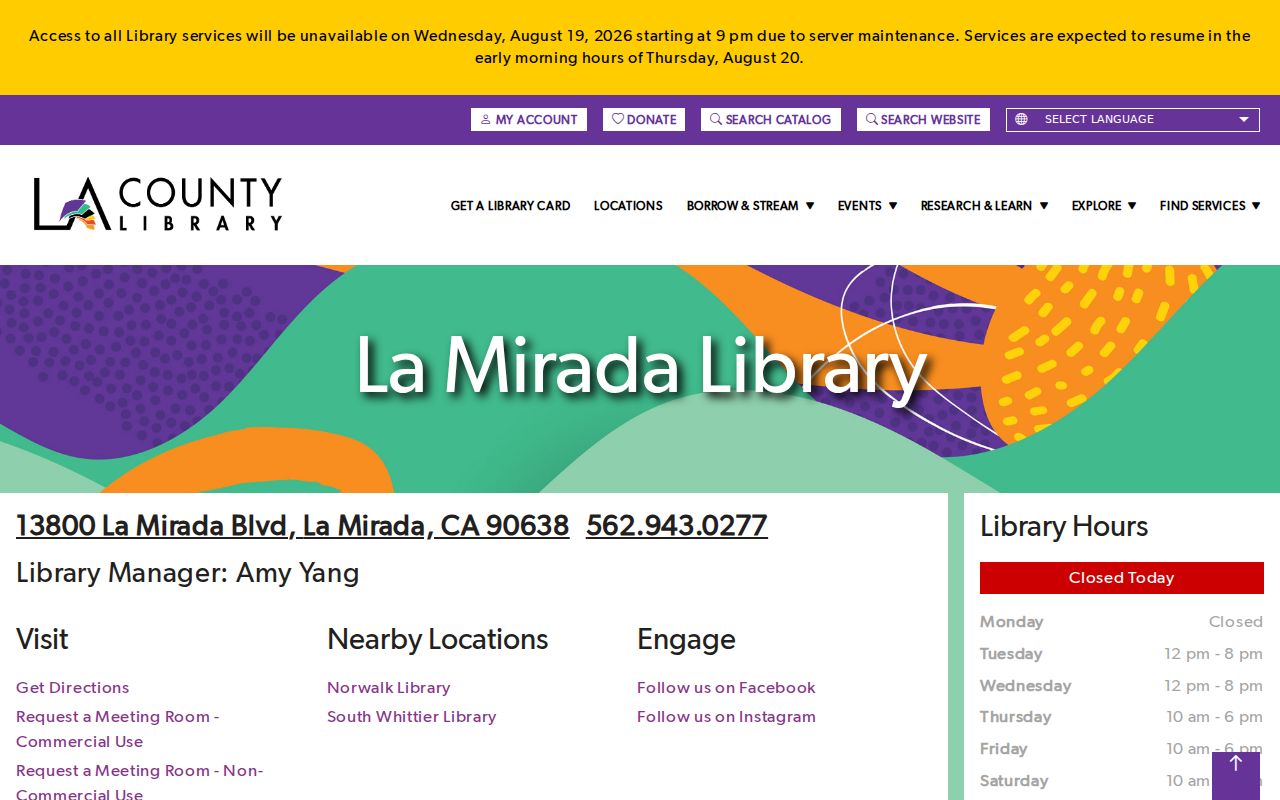
The official La Mirada Library branch page gives the branch address, (562) 943-0277, catalog access, computers, and systemwide research databases. It does not publish an exact La Mirada city directory year list or promise a dedicated local-history room. A call can settle those points faster than a broad online search.
The official La Mirada Library branch page supplies the public contact reflected in the image, not a verified shelf or local volume. Card and in-library rules may apply, so ask what can be viewed at the branch and what requires another County Library route.
The call should produce a precise lead: title, publisher, place coverage, format, and verified years.
Keep the verification call sheet short and specific:
- Ask for Polk volumes under La Mirada and Mirada, including any regional title that lists the community.
- Ask for Haines Criss-Cross books and whether a street and house-number reverse section is present.
- Ask for Pacific Bell or General Telephone books covering La Mirada, Norwalk, Whittier, Buena Park, or southeast Los Angeles County.
- Ask whether newspapers, an obituary card index, microfilm, or a local-history reference collection is available or only cataloged elsewhere.
- Ask which years, formats, viewing rules, and reproduction options the staff can verify before travel.
Regional La Mirada Directories
A regional shelf can answer a local question without carrying the city’s present name. Norwalk and Whittier headings may hold older entries, while Buena Park and southeast Los Angeles County titles can capture telephone exchanges or suburban edges. Test those headings because La Mirada’s history makes them plausible.
The La Mirada city and community directory is a current organizational contact list, not a historical household directory. It points to schools, houses of worship, and public agencies, but does not replace a Polk, Haines, telephone, or criss-cross volume. Biola University archives, yearbooks, alumni channels, and campus publications are another affiliation lead; exact runs require its catalog, and contact should go through the institution.
Reading La Mirada Directory Entries
A typical twentieth-century directory entry is a schema for research, not a verified La Mirada sample. No digitized official La Mirada entry was located in the inspected sources. Depending on the volume, an alphabetical listing may include the following fields:
| Surname and given name | Family name followed by a given name or initial. |
|---|---|
| Spouse | A spouse may appear in parentheses after the primary name. |
| Occupation or employer | Work description or employer text, when the volume prints it. |
| Home address and telephone | Street address and a listed phone number, if supplied. |
| Residence marks | Abbreviations such as r for residence, h for house or boards, defined by that volume’s key. |
| Widow notation | A mark such as wid can connect a household entry to a spouse’s death. |
| Ownership marker | Some runs distinguish title status; many do not, so use the volume's key. |
Read every symbol against the book’s key. An occupation, phone, or address can anchor family history, but it does not establish present residence, ownership, or everyone in a home.
Criss-Cross Clues in La Mirada Directories
The reverse portion of a criss-cross directory is organized by street and house number. It can turn an address into a listed occupant or telephone lead, then send the researcher back to the alphabetical section. That reverse path is useful for a past household, but omissions and changes in listing practice are common.
- Criss-cross directory
- An address-ordered directory, usually arranged by street name and house number, with a link to a listed occupant or phone entry.
- Householder index
- An alphabetical or name-based aid that points to a household listing; it is an index, not proof that every household member appears.
- Abbreviation key
- The volume’s legend for marks such as r, wid, and any ownership marker. Read it before interpreting a line.
Use the reverse section to test an address, not assume ownership. Deeds and assessor records answer ownership questions through separate county systems. A listing answers only what that book recorded at that time.
Note: A missing address in one La Mirada directory means only that the address was not listed in that volume.
Trace La Mirada Households by Year
A family-history trace works best when each clue gets a date, address, and second record type. Start with known spelling and likely place heading, then move from alphabetical to street section. Do not treat one entry as the whole story.
- Find the earliest confirmed appearance in an available directory and copy the full name, spouse mark, occupation, phone, and address.
- Follow the name through later volumes, testing initials, Spanish compound surnames, diacritics, hyphenation, married names, and likely OCR variations.
- Check the reverse section at each address to see whether the same household or nearby house numbers are listed.
- Pair directory intervals with released census schedules, especially the 1950 census, to compare household members, ages, birthplace, and occupation.
- Use deeds, local newspapers, obituaries, and probate records to separate a move, death, ownership transfer, or an unlisted year.
When a name disappears, several explanations remain open: the person moved, died, changed names, fell outside the book’s coverage, or simply was not listed. A deed can show an owner change, while a census or obituary can clarify household timing. Probate may identify heirs when an estate explains a later transfer.
If the question shifts from a historical household to a current parcel, the La Mirada by-street record chain handles modern address-keyed sources without re-describing the historical shelf.
La Mirada Directories Meet the Census
NARA’s census research page is the federal release checkpoint for household comparison. Federal schedules from 1790 through 1950 are publicly released, and 1950 is the newest public census in 2026. The 1960 census is due in 2032 under the 72-year rule.
The census supplies a household snapshot, not an annual trail. A city directory can fill years between schedules, while a deed can distinguish owner from listed occupant. Compare names, ages, relationships, birthplace, and occupation, then confirm the street and place heading fit La Mirada or its regional title.
The NARA census research page is a source for released schedules, not a digitized La Mirada city directory entry.
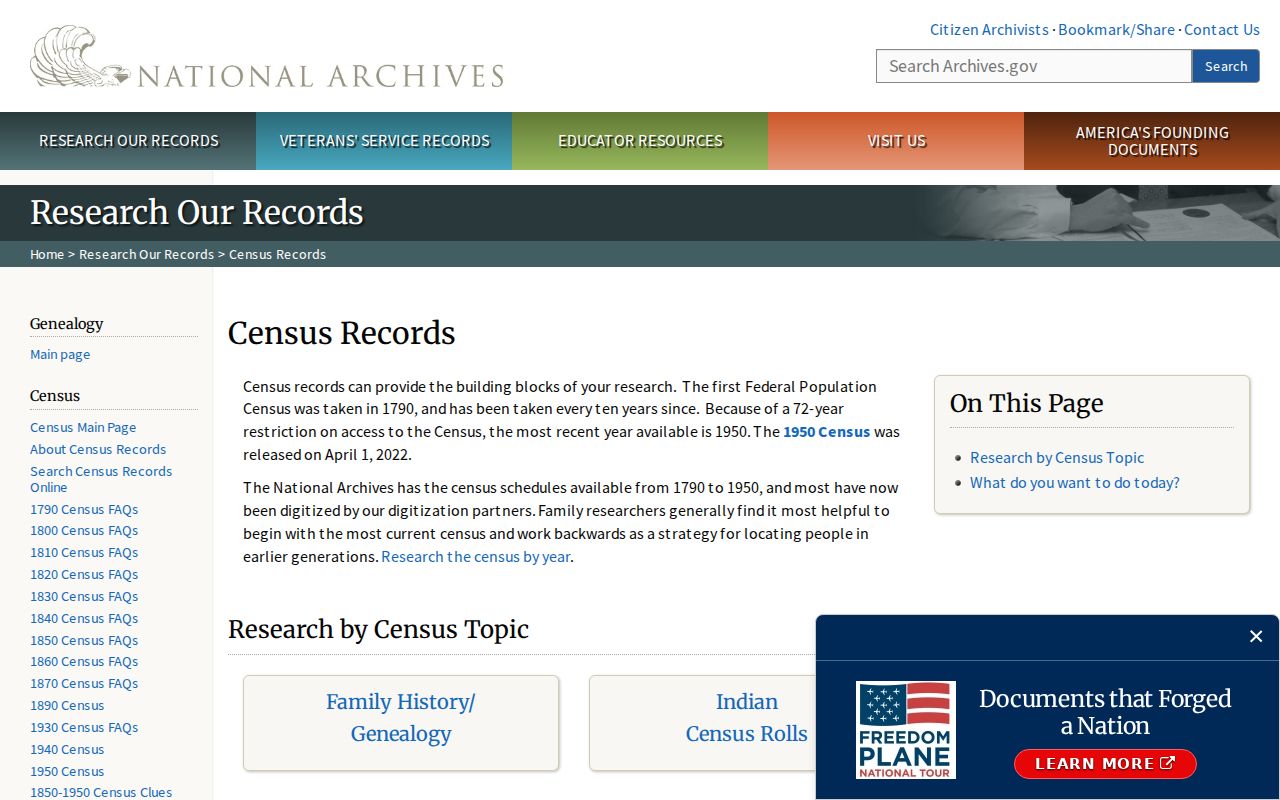
That distinction prevents a census match from being mistaken for a complete city directory run or a continuous record of residence.
Postwar La Mirada Research Gaps
La Mirada’s postwar development makes tract maps, subdivision deeds, aerials, assessor maps, and building permits important companions to a presumed nineteenth-century Sanborn set. Standalone Sanborn sheets for La Mirada were not located in the official sources inspected. A map or permit may show how an address came into being even when a directory volume is missing.
The La Mirada Building and Safety page links the permit viewer and explains current procedures. Online summaries cover the current six years, while historic permit records can be viewed at City Hall. Permit fields can name an owner, applicant, contractor, project address, APN, and work description, but a permit dates construction or alteration, not a person’s move.
A focused zoning-letter or permit request should name the street address or APN and date range. A zoning letter may assemble zoning, permits, occupancy certificates, licensed-business information, entitlements, and known code issues. This address evidence can explain a directory gap without inventing a run.
La Mirada Parcels Are Not Household Directories
An assessor parcel identifies land and assessment facts, not everyone living at the address. The Los Angeles County Assessor Portal searches by AIN or situs address, while owner names are suppressed from the general public web display. The physical situs, tax-mailing address, and legal description can point to different facts. A criss-cross listing, deed, permit, or census entry also has its own date and purpose.
For a missing city directory, the California State Archives catalog and research room are a fallback. The Los Angeles County Registrar-Recorder/County Clerk preserves real-property records from 1850 through a name-and-year index that is not publicly searchable online. These offices can anchor a household trail, but none creates a live list of every person at a La Mirada address.
La Mirada Records Milestones
Four verified milestones keep a city directory search grounded in the record systems that actually existed. They do not supply missing Polk, Haines, telephone, or criss-cross years.
| Milestone | What it establishes |
|---|---|
| 1850 | Los Angeles County’s recorder real-estate series begins, before La Mirada incorporated. |
| July 1905 | California statewide civil vital registration begins. |
| 1950 | The newest public federal census in 2026 under the 72-year release rule. |
| 1960 | La Mirada incorporates as a city. |
Use the milestones as boundaries, not as proof that a directory existed in any one year. When the library cannot verify a local volume, expand the catalog terms, pair whatever is found with census and deed evidence, and record every unresolved gap.